MOBILITY

Future Mobility Vision of Kia Motors

A car in recent years has evolved beyond the means of ‘mobility’ into the arena of another ‘living space’ with sophisticated IT technologies, including autonomous driving and connected technology incorporated in it. In addition, with the dissemination of sharing trends, which is a new paradigm of economic life, a car will accelerate the advent of the era of ‘sharing’ instead of ‘owning’ one.

The focus of the car industry ecosystem is being rapidly transformed from ‘manufacturing’ to ‘providing services’ as not only complete car makers but also IT tech giants offer new business visions that encompass a variety of ‘mobility’ services in a comprehensive manner.

Kia is actively investing in the fields of Mobility Service Platform for the Human-centric urban society.

main03

WiBLE

WiBLE, the new carsharing service powered by Kia and Repsol, begins its journey through the streets of Madrid with Kia Niro Plug-in Hybrid. With a totally free registration and online validation, users can register themselves in the service. The account will be verified and activated automatically by the system in some minutes. WiBLE’s bet is focused on being a service for people, positioning itself as the largest, safest, most flexible and comfortable car that goes beyond.

Future of autonomous Vehicles

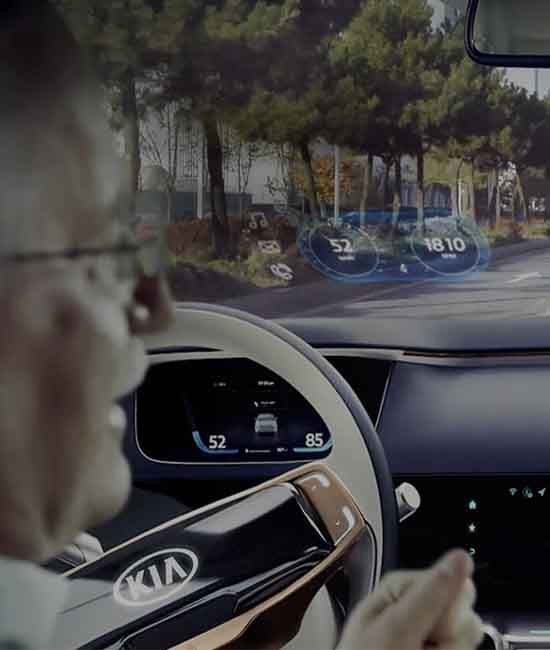
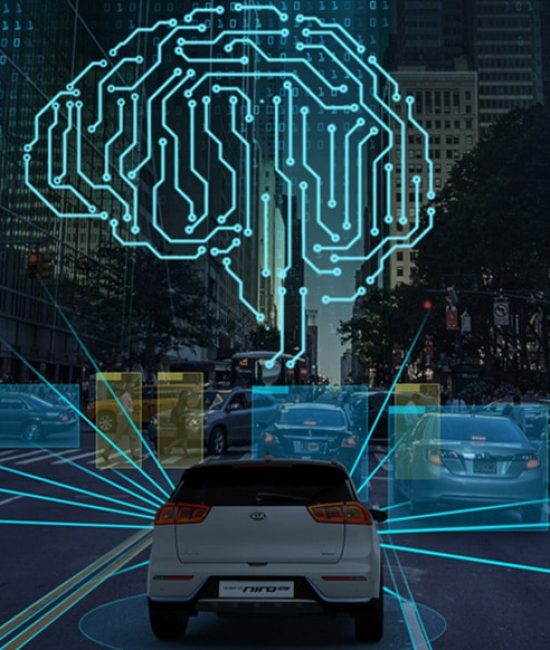
Think about it for a moment. Your car navigates itself to a preset destination by monitoring surroundings on its own while you concentrate on work or lay back and talk with your friend. This is what autonomous driving technology promises us in the foreseeable future.

autonomo
drive wise

Drive Wise

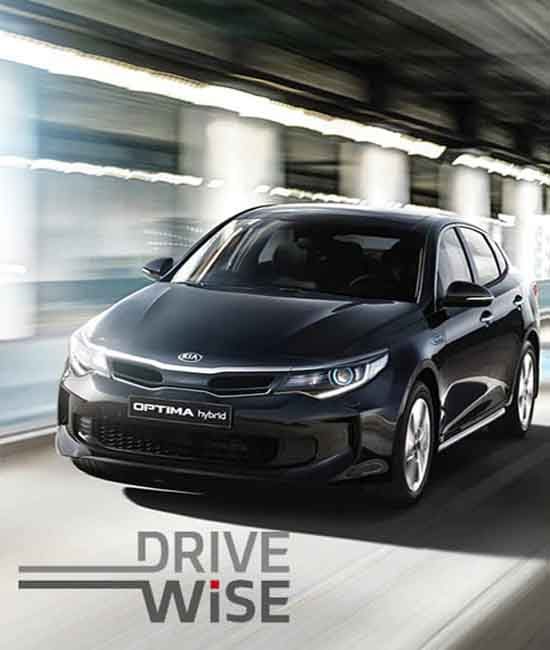
Autonomous driving is technology-intensive as it converges dozens of precise, complex and cutting-edge technologies. The individual technologies are collectively called an advanced driver assistance system (ADAS). The ADAS technology consists of three steps: monitoring surroundings, making decisions and then handling vehicles. However, autonomous driving technology is more than half-done when all these steps are advanced and integrated enough to take full control of vehicles. The rest is up to communication technology, which is an integral part of connected cars. Kia’s vision for autonomous driving is being materialized through DRIVE WiSE, its ADAS-based autonomous driving technology brand launched in 2016. DRIVE WiSE is aimed at eliminating accident risks at the source, providing the driver with information on surroundings, and taking over the handling of the vehicle from the driver, thereby providing a safer, more convenient and more efficient mobility solution. DRIVE WiSE is aimed at eliminating accident risks at the source, providing the driver with information on surroundings, and taking over the handling of the vehicle from the driver, thereby providing a safer, more convenient and more efficient mobility solution.

Automated Valet Parking System (AVPS)

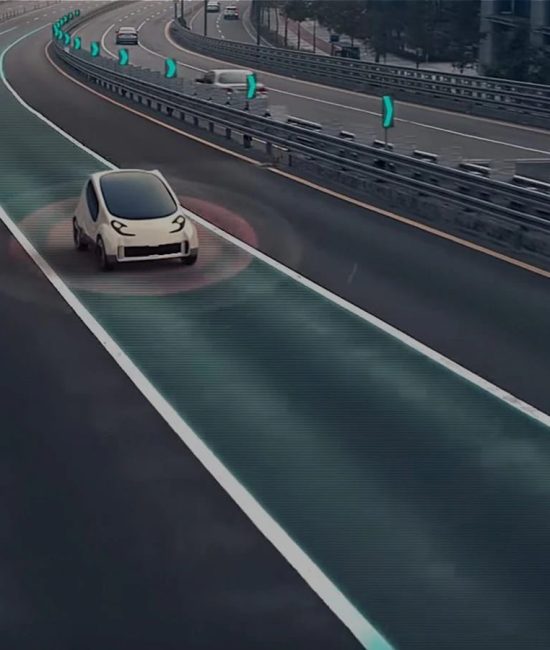
By utilizing the autonomous driving sensors of the vehicle, this technology makes parking as convenient as a trust-worthy valet parking service. The vehicle searches for parking slots without the driver present. The car parks itself and can be called back upon when you are leaving, as well. This feature may be used to recharge electric cars when necessary and move to another parking slot to make room for the next electric car that needs to recharge.

valet-parking

Hyper connected services

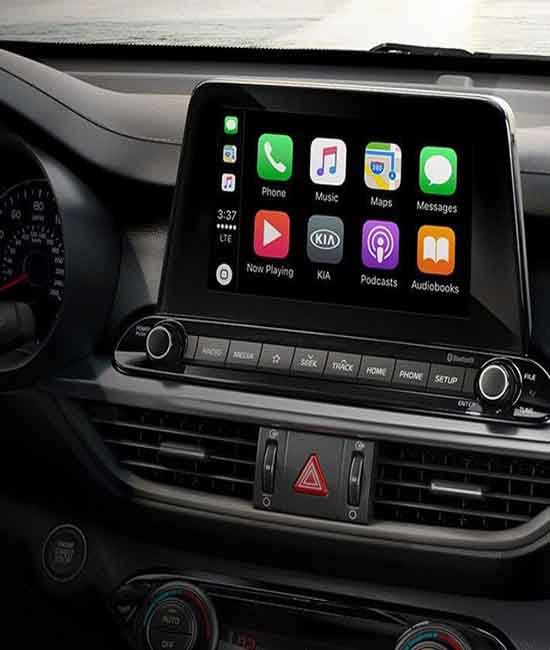
Today, cars are integrating computers and artificial intelligence into their systems faster than expected. They can recognize your voice and process orders you make on the touchscreen. In addition, their functions are rapidly expanding from simple basics like map searches and phone connection to more advanced features like music play, weather forecasts, scheduling, and control of vehicle features like air conditioning and sunroof Soon, connected cars will boast even more advanced features such as controlling electric appliances at home, checking the health of drivers and communicating with doctorsvia a video call. If autonomous driving technology is for the freedom of mobility, connected cars will enrich our lives. An in-house development of key technologies for connected car will strengthen KiaâTMs possibilities for collaboration with leading global ICT players and investments in prospect start-ups. After rolling out its first connected car by 2020, Kia Motors will expand application of relevant technologies until all of its cars are equipped with connected services by 2030.

Boundless Technology of Connectivity

The connected cars currently under development at Kia Motors take advantage of artificial intelligence and voice recognition technologies to control cars and provide information while also helping drivers stay connected to everything such as smartphones, home appliances and medical services. Simply put, it can comprehend human language, not computer language, communicated in multiple sentences like “Tell me tomorrow’s weather forecast and turn on the light at home for me,” while processing multiple orders one after another.

To accomplish this daunting task, Kia Motors formed a task force and broke down boundaries of collaboration between different parts of the organizations. The first move was to build a voice recognition research lab within its R&D center in Namyang in 2014, followed by teaming up with experts in the field of connected technology development. Since then, the company has successfully developed a stable connectivity environment and an in-house ccOS that can swiftly process a vast amount of data. Currently in the works is a connected car service platform (ccSP) that will provide users with various services in collaboration with ICT companies from Korea, the U.S. and China.

boundless
32

A Connected Future

Deep learning technology which based on big data is expediting the advancement of artificial intelligence and is also an integral part of developing connected cars. Kia Motors established its own big data center in Korea in 2013 and created a team of data scientists to fortify its big data utilization know-how. Kia’s big data center assetizes and analyzes the data collected through the cloud to realize optimized connected car services, while providing market forecasts and setting the future direction for research activities.

Furthermore, the company established its first overseas big data center in China in September 2017 that will set the stage for introducing its connected car service in the world’s most populous market. More plans are in place to set up new big data centers in other strategic markets around the world, while Kia Motors has also invested in the American Center for Mobility an industry-academia cooperation entity authorized by the U.S. government that will perform research into future mobility when completed by the end of 2019.

In 2020, Kia’s first connected car will roll off the production line. Featuring diverse connected car services, this next-generation vehicle will perform all the above-mentioned functions at a processing speed of one gigabyte per second, showing everyone how near the future has come. These connected car technologies will be applied to the full range of Kia models in phases by 2030

The coming of eco-friendly energy age

Eco-friendly vehicles (or green cars) will play a pivotal role in future mobility, and the shift from petroleum to electricity powered vehicles has already become the norm. In fact, the green car market is doubling in size each year, while the overall automobile market is only growing at a mere two percent annually. At the same time, environmental stewardship is taking center stage across the board, and Kia Motors already has achieved its goal of ranking in second place (based on combined market share with Hyundai Motor Company) in the global green car market in 2017 three years ahead the scheduled goal of 2020.

In 2018, the company’s goal is to remain steady in second place, while it has set a new target of expanding its green car line up to a total of 16 models five HEVs, five PHEVs, five EVs and one FCEV by 2025. To start, the company is preparing an EV version of the Niro, for which HEV and PHEV variants were introduced in 2016 and 2017, respectively. As you can see, the auto industry is moving forward at full speed and green cars represent the future of mobility.

ECO

Having first introduced HEV variants of its larger-sized products like the Optima (K5) in 2011 and Cadenza (K7) in 2013, Kia Mo-tors added the Niro HEV in 2016 and plans to introduce HEVs to all product segments in the future. he Niro HEV, which received acclaim for integrating a hybrid power train with an SUV body, has established itself in the global market with its fuel efficiency of 19.5 km/ℓ and carbon emissions of 79 g/km. In particular, the Niro HEV’s battery not only is smartly located under the rear seat without compromising passenger or boot space but also has earned market credibility thanks to its lifetime warranty.

In 2017, the Niro was the top selling hybrid vehicle in Korea market and second bestselling HEV in the U.S. green car market. It was also the first Korean vehicle to top the residual value list in the alternative fuel segment by Automotive Lease Guide of the U.S

Designed exclusively from the beginning to house only eco-friendly powertrains, the Niro is phasing in hybrid, plug-in hybrid and full electric versions. After the launch of the hybrid variant in 2016, the Niro plug-in hybrid model was introduced to the market in 2017. The Niro PHEV marks the company’s second plug-in hybrid offering following the Optima (K5) PHEV. Its all-electric range in EV mode is 40 km with carbon emissions as low as 26 g/km. Niro PHEV’s engine efficiency stands at 18.6 km/ℓ, while in EV mode efficiency is improves to 5.1 km/kWh, enabling the vehicle to travel as far as 840 km on a full tank of fuel and fully charged battery

ELECTRIC

Kia Motors launched its first electric vehicle, the Ray EV, in 2011 and added the Soul EV in 2014. Since then, each model has under gone upgrades each year. In 2018, next-generation models will be launched with significantly improved range thanks to segmentation of the in house developed battery system module that will bring capacity down to below the 5 kWh level in order to maximize space utility while providing even weight distribution and increasing the versatility of battery load capacity.

In addition, the Niro EV will be marketed by the end of 2018 with an extended range of 380 km more than double the Soul EV’s range of 180 km. Kia Motors will also increase consumer options by categorizing driving ranges into short-range driving and long range driving, while enhancing marketability thanks to faster full charge durations. Currently, a high voltage system is under development while the company is also participating in the development of inter-national standards for high-voltage fast chargers to help boost the proliferation of electric vehicles.

A fuel cell electric vehicle is a type of electric vehicle that relies on a fuel cell to generate electricity by combining oxygen from the air and compressed hydrogen that powers its on-board electric motor. As a result, it is truly eco-friendly as water is the only emissions. Despite their fast charging times, the lack of adequate hydrogen charging infrastructure has hindered FCEVs from succeeding in the market. While the market is growing steadily, FCEVs are still classified as a future type of eco-friendly vehicle. Kia Motors has been developing fuel cell technology since 1998. Following development of the first-generation Mohave FCEV in 2003, the second-generation model has been in pilot operation since 2008. It can travel up to 690 km on a single charge with a maximum speed of 160 km/h.

Need Help? Chat with us